Why Truck Driver Recruiting Is No Longer Just Hiring
Let’s just start here:
You are not competing with other fleets anymore. Not really.
You’re competing with someone else’s better driver experience.
Drivers today do not just pick a company. They pick a lifestyle. Industry data backs that up. The U.S. is still short roughly 60,000 to 80,000 drivers and will need more than 1.1 million new hires this decade to replace retirees and keep freight moving. That number keeps climbing as experienced drivers age out and industry pressures intensify.
So yes, recruiting is still the job. But the mistake many fleets make is treating recruiting like hiring. Modern truck driver recruiting is really marketing, operations, culture, and technology rolled into one.
Let’s break down what works and what absolutely does not.
The Reality: It’s a Truck Driver Quality Shortage
For years, the industry talked about a “driver shortage.” Today, it is more accurate to call it a qualified driver shortage. Turnover at large truckload carriers still hovers near 85–90% annually.
Most fleets are not struggling to get applicants. They are struggling to keep the right ones.
Recruiting is not about generating more leads. It is about attracting drivers who already know what a bad fleet looks like. Spoiler: they have worked for one.
Truck Driver Recruiting Best Practices That Actually Work
1. Recruit in the Right Places, Not Just Online
Yes, online applications matter, but qualified drivers still trust human conversations more than landing pages. That is why events like Mid-America Trucking Show (MATS) still outperform many digital ads.
Drivers talk to drivers. Dispatchers talk to recruiters. Word spreads fast. Your booth is not just a lead generator. It is a credibility audit.
Drivers are not only asking, “What do you pay?”
They are asking, “Do I believe you?”
2. Predictability Beats Pay
Here is a stat many fleets misunderstand: 81.9% of drivers say predictable pay matters more than anything else when job hunting.
Not the highest pay. Not the biggest sign-on bonus. Not the fanciest driver lounge. Predictable pay.
Drivers do not leave fleets because they made $0.10 less per mile. They leave because they made $900 less this week than last week and nobody could explain why.
The recruiting message should shift:
- Old: “Top pay!”
- Better: “You will know what your paycheck will be before Friday.”
One builds curiosity. The other builds trust.
3. Remove Friction From the Driver’s Day
A major driver complaint is not just miles. It is wasted time, especially during down periods on the road. Unpaid detention, unclear schedules, paperwork delays, and sitting at docks all erode driver satisfaction.
Reducing non-earning time dramatically improves retention and strengthens recruiting appeal. The best recruiting ad is operational competence. Drivers do not refer friends to chaos.
4. Market the Experience, Not the Truck
Fleets must adapt to a changing workforce and engage younger and more diverse drivers. You are not hiring a CDL. You are hiring a person with options, and there are more options today than ever before.
Drivers now evaluate several factors:
- Time at home
- Consistency
- Communication
- Respect from dispatch
- In-cab experience
Yes, in-cab experience matters. Comfort and connection have become retention tools. If your driver’s truck is the loneliest part of their week, someone else will recruit them.
Idle time drains morale. Repeated idle time drives turnover.
5. Separate Recruiting From Retargeting
This one is subtle. If your marketing only reaches drivers who already know you, you are not recruiting. You are circulating.
- Prospecting: brand awareness
- Retargeting: conversion
The best fleets run both intentionally.
Truck Driver Recruiting Mistakes and Worst Practices
1. The $15,000 Sign-On Bonus Trap
Nothing says “you will not like it here” quite like a massive bonus. Drivers know the pattern: the bigger the bonus, the bigger the problem.
Big bonuses may attract applicants, but they often dilute the selection pool and repel experienced professionals.
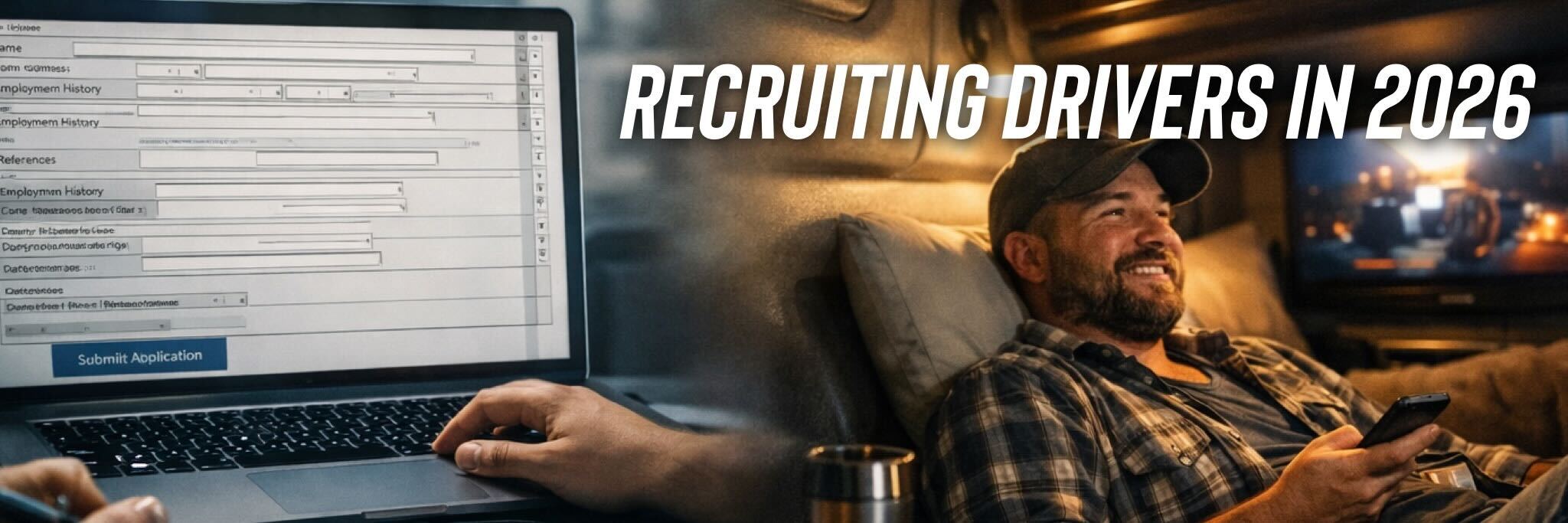
2. The 19-Step Application
- Name
- Address
- Employment history
- Three references
- Supervisor phone number from 2009
- Blood type
- Favorite dinosaur
Qualified drivers quit halfway through. You did not filter out bad drivers. You filtered out busy good ones.
3. The Ghost Recruiter
A driver applies, hears nothing, gets an automated email, waits, then applies somewhere else. In a high-turnover industry, speed is a recruiting strategy. The first company to respond often wins.
The EpicVue Angle
Recruiting today is part operations, part communication, and part driver experience. Drivers talk. In-cab life travels across truck stops faster than any advertisement.
When drivers feel connected, informed, and comfortable, they stay longer and refer others. Technology that improves the daily experience does not just retain drivers. It helps recruit the next one because the most effective recruiting message in trucking has never changed:
“Come here. It’s better.”
The job of any fleet is to make that sentence true, then make sure drivers can prove it to each other.
When the Recruitment Rubber Meets the Road
You do not recruit drivers by telling them you are a good fleet. You recruit drivers by running a good fleet long enough that drivers start telling each other.
Everything else is just advertising, and the industry already has enough of that.