Here's What Fleets Need to Know About Truck Parking
You’ve got 18 minutes left on your clock.
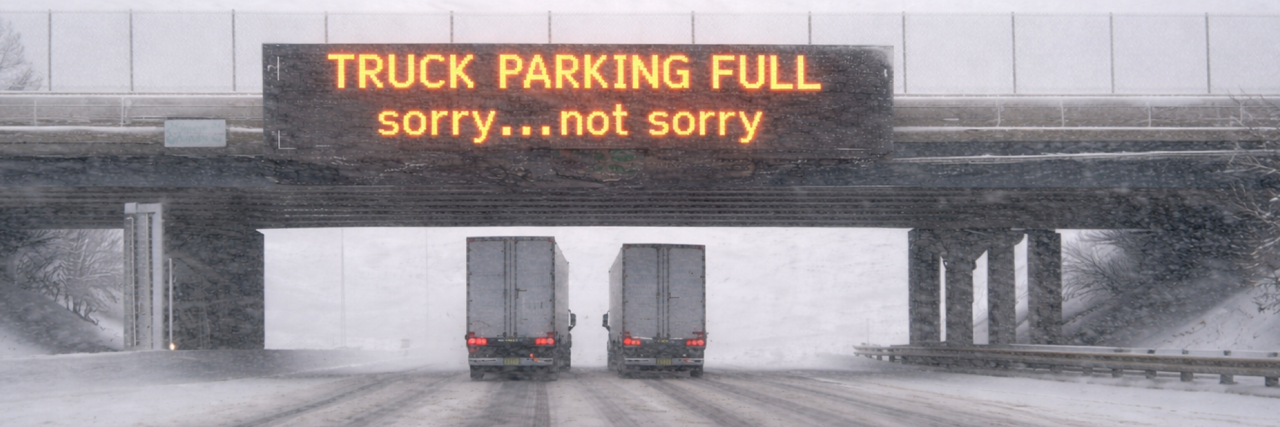
Every truck stop within 50 miles is slammed.
And the only open “spot” looks like a lawsuit waiting to happen.
Welcome to the truck parking crisis, and it’s getting worse fast.
The Problem Isn’t New…But It’s Escalating
Ask any driver what their biggest daily frustration is, and truck parking will be near the top every time.
According to ATRI’s Trucking Industry Concerns report, drivers lose an average of 56 minutes per day searching for parking — the equivalent of thousands of miles in lost annual productivity across a fleet. The industry has been dealing with a massive gap between available parking and actual demand for years.
And in 2026, nothing has caught up:
- Freight lanes are still active
- Urban areas are tighter than ever
- Infrastructure investment hasn’t kept pace with demand
Which means drivers are spending more time hunting for parking than they ever should be.
The Real Cost of “Just Finding a Spot”
On paper, it sounds like an inconvenience. In reality, it’s a ripple effect with real business consequences.
- Lost drive time circling packed lots
- ELD pressure forcing early, unplanned shutdowns
- Unsafe decisions — ramps, shoulders, anywhere that’ll do
- Delivery delays that ripple across the entire supply chain
And then there’s the cost nobody puts on a spreadsheet: stress.
After a full day behind the wheel, the last thing any driver wants is a 45-minute scavenger hunt just to shut down for the night. That kind of daily grind compounds, and drivers remember it.
This Isn’t Just a Parking Problem. It’s a Retention Problem.
Drivers don’t leave jobs only because of pay.
They leave because the job wears them down — and some days, the struggle to wind down between shifts is just as grueling as the shift itself.
Parking is one of those daily friction points that adds up quietly:
- Constant end-of-day uncertainty
- No reliable fallback when primary stops are full
- Pressure to make unsafe calls just to stay compliant
It’s death by a thousand cuts. Fleets that ignore this reality aren’t just risking late loads, they’re accelerating turnover in an industry that can’t afford it.
The Connectivity Problem Nobody Talks About
Here’s a layer of this crisis that doesn’t get enough attention: what happens when the tools drivers rely on to find parking stop working?
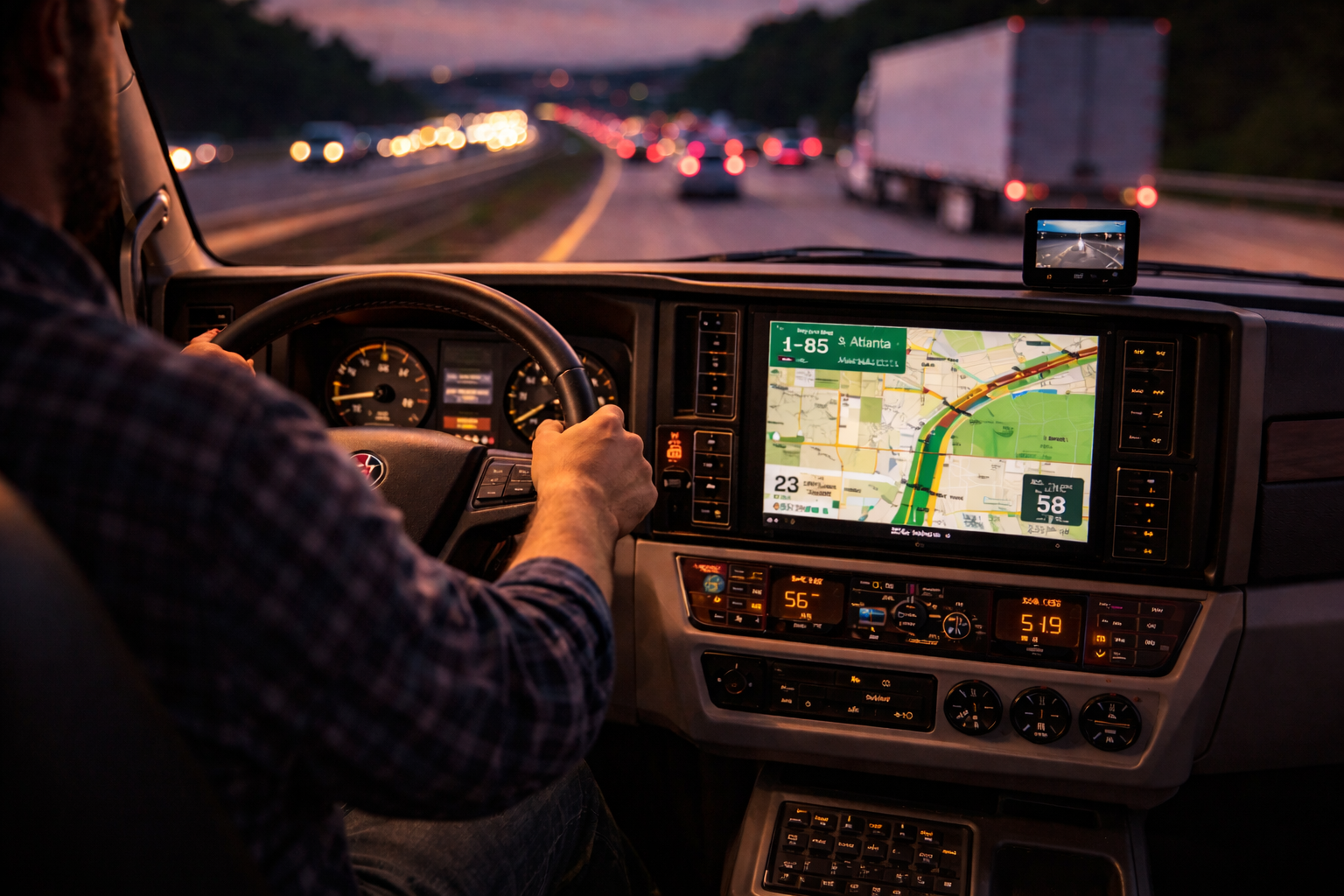
Most parking apps depend on a solid data connection. But long-haul routes — especially through rural corridors in the South, Midwest, and Mountain West — regularly drop drivers into dead zones right when they need information most.
No signal means no visibility into available spots. No visibility means guessing instead of planning. And guessing at the end of a 10-hour shift, with an HOS clock winding down, is how unsafe parking decisions get made.
This is where reliable in-cab connectivity stops being a perk and starts being an operational necessity. A driver who can actually access real-time parking data, regardless of carrier signal strength, makes better decisions and ends the day with less stress.
After You Park — Then What?
Let’s say everything works out. You found a spot. Engine’s off. Day’s done.
Now what?
This is the part of the conversation most fleet managers never have, and it matters more than they think.
Drivers don’t just need a place to park. They need a way to actually decompress. Catch a game. Watch something familiar. Call home. Feel human again before doing it all over tomorrow.
Truck stops are revisiting how they handle parking logistics, and there’s genuine debate in the driver community about the right approach. But regardless of how that shakes out, the in-cab experience after parking is something fleets can control right now.
That’s where solutions like EpicVue+ and EpicWiFi make a real difference. They are a direct investment in driver wellbeing. Consistent entertainment and reliable connectivity in the cab means drivers can actually rest and recharge, rather than sitting in a dark sleeper with nothing but frustration.
What Fleets Should Be Thinking About Right Now
The truck parking crisis won’t be solved overnight, though researchers at the National Center for Freight and Infrastructure Research and Education (CFIRE) are developing tools to better analyze and address this shortage. In the meantime, fleets that adapt now will have a real competitive advantage. Here’s where to focus:
Driver experience is a competitive advantage. Audit your drivers’ end-of-shift experience the same way you audit fuel costs. If you don’t know what that experience looks like, ask them.
In-cab technology is a retention tool. The cab is where drivers spend the majority of their lives. Treating it as an afterthought sends a message — and drivers hear it.
Connectivity is essential, not optional. Evaluate whether your current in-cab technology actually works in low-signal rural corridors. Most solutions don’t — and that gap costs you more than you realize.
When the Rubber Meets the Road
Drivers can handle long miles. They can handle traffic, weather, and tight delivery windows.
But circling a packed truck stop at the end of a brutal day is the kind of thing that makes good drivers rethink the job.
In an industry where retention matters more than ever, that’s not something any fleet can afford to ignore.
Interested in how EpicVue+ and EpicWiFi support driver wellbeing and fleet retention? Send us a note for a proposal with our volume-based discounts.